Many elements influence the quality of the final product throughout the hydraulic rubber hose assembly production process, which must be closely managed throughout.
The hose used in the construction of hydraulic rubber hose assemblies must be tested in accordance with the applicable technical standards to ensure that it fulfills the hose assembly’s numerous performance indicators and usage criteria.
A few factors should be considered throughout the check.
(1) Because the inner and outer diameters of the hose, as well as the outer diameter of the skeleton layer, are modified, the range of variation exceeds the permitted limit, the pressure balance of the hose joint cannot be guaranteed, and the quality of the hose assembly is difficult to ensure. As a result, the hose used in the fabrication of hose components must be rigorously tested to ensure that the outer diameter of the inner longitude and skeleton layer fulfills the criteria and that the outer diameter deviation can be suitably loosened.
As a result, it is vital to ensure that the adhesion between the layers of the hose is not less than the technical specifications, and to use high adhesion hose for hose assembly manufacturing as much as feasible.
(4) Hose appearance quality, hose appearance quality cannot be overlooked, as it affects not only the appearance quality of the hose assembly, but also the quality of usage.
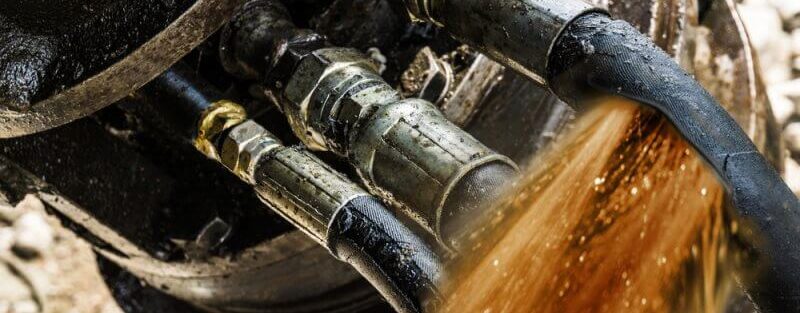
If there is a bubble, a rubber air hole, or mechanical damage, and expose the skeleton layer, causing skeleton layer corrosion, reducing the compression strength of the hose, directly affecting the service life of the hose assemblies, and even accidents occurred in the use process, should pay attention to check the appearance quality of the hose, eliminating the defects affect the appearance of the hose assemblies performance. Joint metal part quality control.
Tube core connector. Before installing the joint, the coat and connecting seal pieces must be thoroughly inspected. Aside from ensuring that the size, tolerance, and machining precision fulfill the requirements of the joint designs, it is also required to examine the interchangeability of the junction and the hose used to match, as well as the core pipe surface smoothness and smooth Angle.
If the metal portions of the joint are discovered to have sharp edges or burrs, they must be thoroughly fixed before they can be utilized, or the performance and service life of the hose assembly will be severely harmed.
Radial fracture or axial crack can develop during the assembly and clamping of joints or hydraulic testing due to probable faults in the steel used in the process that are difficult to identify with the naked eye.
As a result, metal elements of the same joint should be thoroughly examined one at a time to eliminate possible concealed hazards.